



Why has Steinway & Sons Dominated the Concert Market?
Question: "It seems like I see Steinway pianos on stage all of the time. Why has Steinway & Sons dominated the concert market?"Although Steinway & Sons Concert Grand Pianos currently rule almost all of today’s concert stages throughout the world, it wasn’t always this way. Even today, competitors fight hard to place their pianos on performance stages. With over 90% of concert pianists performing today on Steinway pianos, it is easy to forget that this company was once a small upstart fighting for their position within the massive North American piano market.
The Marketing | Steinway’s Prowess
Steinway & Sons has mastered the art of marketing. That is not to say they have not or do not continue to make quality products. Rather, they were the piano company who mastered both the art of piano building and the cut-throat world of advertising. During their early history, there were numerous high-end piano makers all competing for the ever growing piano market. Names such as Chickering, Knabe, Weber, Mason & Hamlin and Steinway were in an ever ongoing battle to become THE best in the industry. William Steinway, Henry E. Steinway’s son gets much of the credit for Steinway & Sons’ business and marketing prowess. Having high caliber pianists choose your piano over others was seen as being highly prestigious and influential. Thus, the Steinway Artists program was birthed coupled with the company’s bank of concert instruments.
The Three Steps of Steinway Piano Restoration | Infographic
Three Main Steps of Steinway Grand Piano Restoration
The art of piano restoration is more than simply swapping parts. The definition of rebuilt (amount of work actually done on the piano and the associated quality) varies a lot in the industry. Premium brands like Steinway and Mason & Hamlin are among the pianos most likely to warrant an extensive restoration. This infographic touches on some of the basics that go into a full, Steinway piano restoration. Scroll through the handy infographic to learn more about the rich history and work that goes into the restoration of vintage pianos. [Click the infographic to expand.]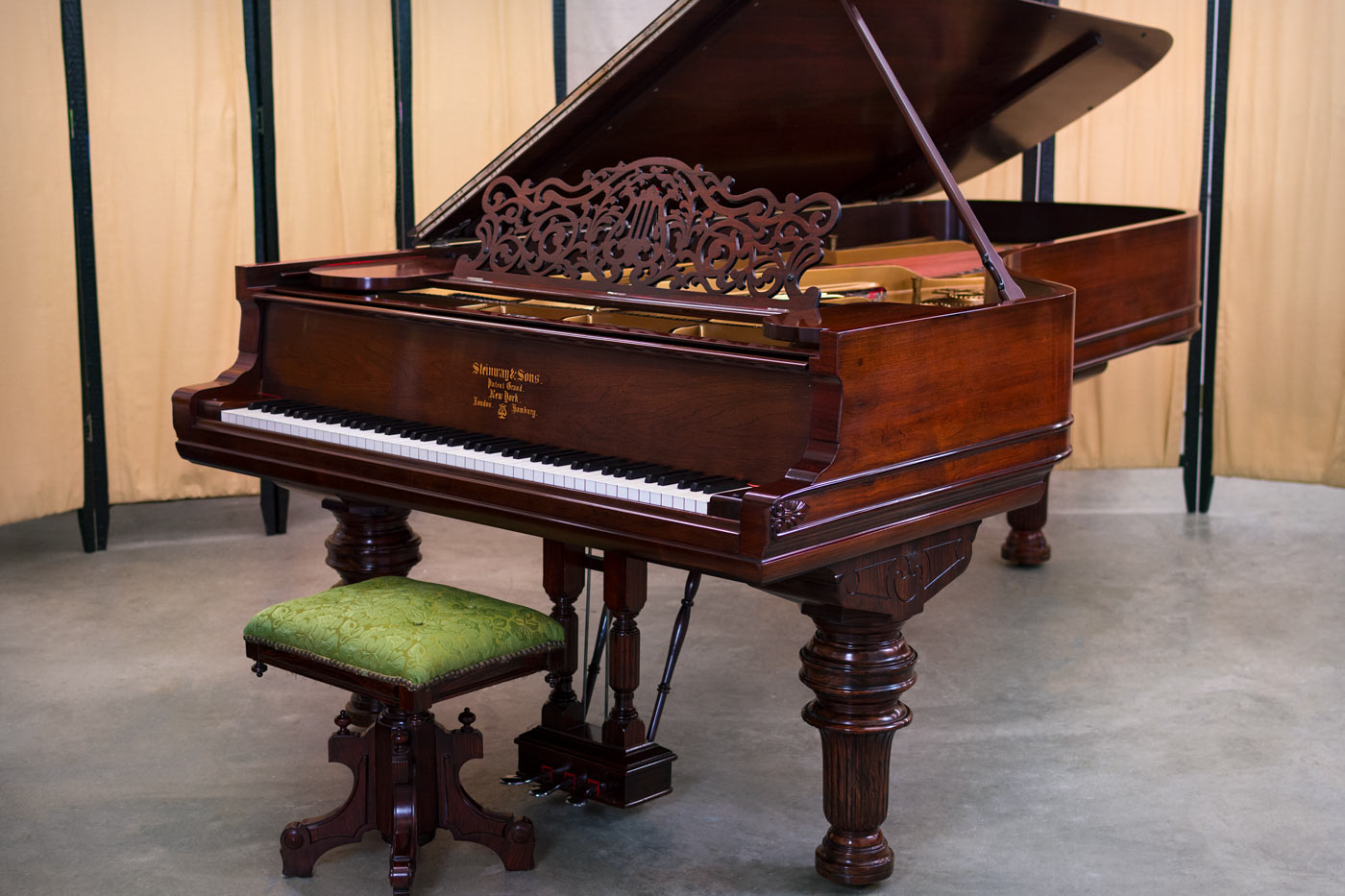
History of Art Case Steinway Model D Grand Piano #52626
Steinway Model D Grand Piano #52626 | A Beautiful Past For A Beautiful Piano
There’s an old saying, “If these walls could talk, they’d tell you a story or two.” A concert grand piano from Steinway & Sons will last for generations and over time they accumulate a rich and beautiful history. As one of the greatest piano manufacturers in the world, Steinway pianos are used in venues and by musicians across the globe. Over time, these pianos will see their fair share of usage, and pass through many hands. At Chupp’s Piano Service, we specialize in restoring these beautiful pianos back to playing perfection, and today, we want to shine a little spotlight on a beautiful piano that we are proud to feature - Steinway Model D Grand Piano #52626.The Origin of the Modern Concert Grand
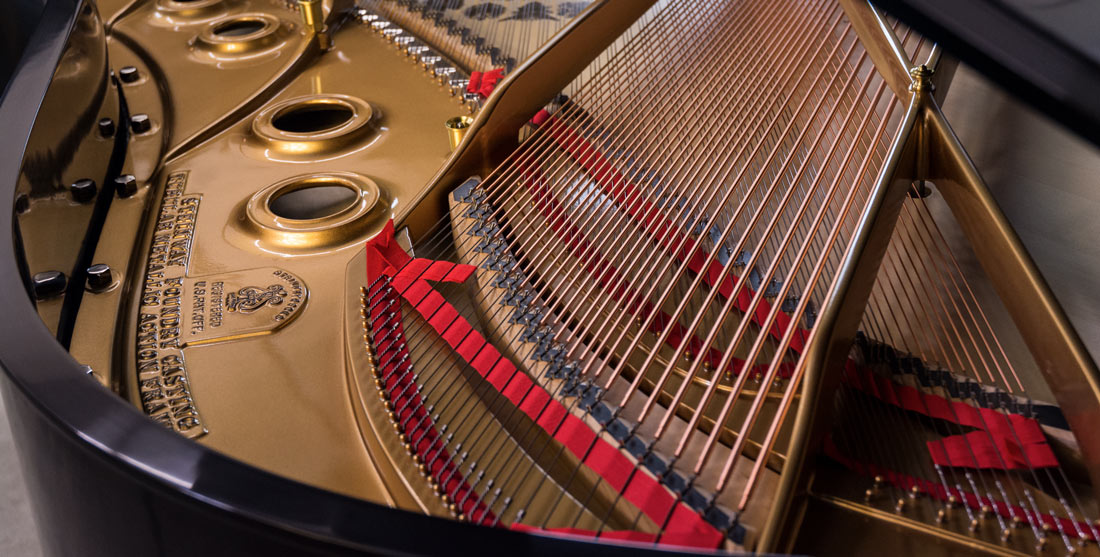
In 1884, a major step forward occurred in the development of the mature concert grand piano- the Model D. The then new Model D was designed and created by incredibly talented craftsman C.F. Theodore Steinway. This new design was the first Steinway Grand to feature a double cupola plate. It featured a 20 note bass section, was overstrung, had a continuous soundboard bridge, and a bent rim case construction. These pianos featured agraffes from notes 1-35 and a capo d’astro bar from notes 36-88. Measuring 8’10” in length with 7 ¼ octaves, these pianos are an essential piece of the piano development puzzle.“Style D has an entirely new interior construction with double cupola steel frame and continuous ring bridge. The improvement in power and sonority of tone is simply marvelous.” – William Steinway, September 1, 1884.
Refinished vs. Refurbished vs. Restored Pianos
Refinished vs. Refurbished vs. Restored Pianos | What’s the Difference?
Question: "I am looking to purchase a piano. As I've gone through various websites I've noticed the terms 'restored', 'refurbished' and 'refinished.' What is the difference between these terms?"
With numerous individuals and businesses within the worldwide piano industry, the terms ‘restored’ or ‘refurbished’ gets thrown around quite a bit. This can lead to a bit of confusion over the actual condition of the piano in question and what each term actually means. We can’t speak for other businesses or piano technicians, however below you will find the definitions we use for these various terms.
Piano Refinishing
Cosmetic Restoration: The refinishing of a piano is purely cosmetic. This is done to refresh the instrument and return a like new look and feel to the exterior of the piano cabinet. When we refinish a piano we utilize the finest materials and workmanship to ensure a premium, like new finish. We utilize closed pore, hand rubbed lacquer finishes over the quicker sprayed-only method. This ensures a finish with optimum clarity and one that is more easily repairable in the future. [Read more about the piano refinishing process.] Refinishing the piano cabinet is a normal part of our extensive piano restoration process. We may also refinish a piano that is in very good mechanical and interior condition but needs to be cosmetically refreshed to make it retail ready. Often refinishing will also be coupled with the refurbishing of a piano. Although it does not affect the actual mechanical function of the piano, obviously aesthetics count toward your overall enjoyment and the value of the piano.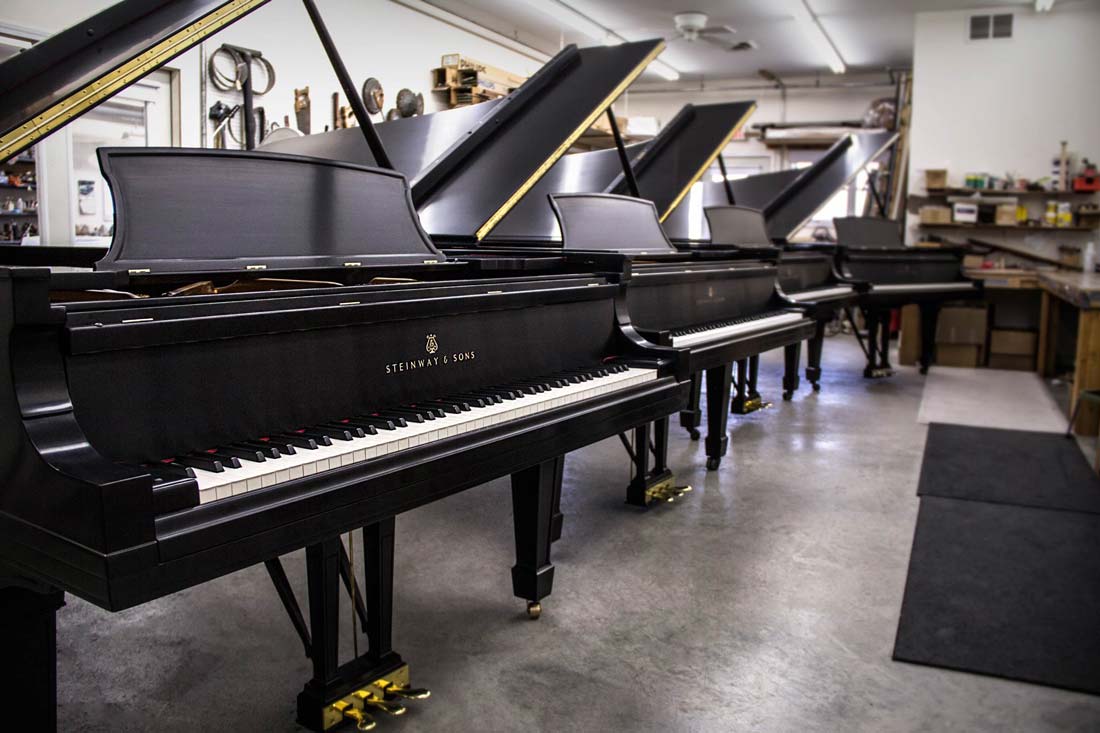
Why Buy A Restored Steinway Piano?
Top 3 Reasons Why You Should Purchase a Restored Steinway Grand Piano
Question: “I have read a lot about vintage Steinways vs. new. Why should I consider purchasing a restored Steinway over a new one?"
Here at Chupp’s Pianos, we often receive questions related to the differences between new and restored Steinway & Sons Pianos. After talking to our clients about the benefits and drawbacks of each type of piano, these conversations often lead up to the ultimate question: “Should I buy a new Steinway, or a vintage restored Steinway piano?” At the end of the day, we often find that finding a second home to a restored piano is the best way to go. Restored pianos are excellent musical investments that are often superior to brand new pianos. The workmanship during the 'golden era' of piano manufacturing was truly standard setting. Below you’ll find the top 3 reasons considering a restored Steinway & Sons piano might be in your best interest over a new one.
Ohio Pianist Selects Restored Steinway M from Chupp’s Pianos
Kevin Vietmeier On His Golden Era Restored Steinway
Recently we were able to fully restore a golden era Steinway & Sons Model M Grand Piano for pianist Kevin Vietmeier. We were all very pleased with the tone and touch of the finished instrument. He was kind enough to leave a five star Google Review for us which we have reprinted below."After searching for a grand piano in Pennsylvania and Ohio (including official Steinway stores), I stumbled across Chupp's and drove out to play a Model M they had on sale. The owner, Dennis, was extremely patient and walked me through his restoration facility explaining the entire process of restoring a vintage Steinway. After playing some of their fully restored pianos, I was greatly impressed and decided to purchase a 1923 Model M and have them do a complete restoration. Dennis and Tim were both upfront and honest with me throughout the entire process, and in the end I got a beautifully restored Steinway with the gorgeous tone I was expecting and unfortunately not hearing when playing brand new Steinways at other stores. I have had two technicians play the piano, and both were astounded at the excellent workmanship put into this instrument.
VIDEO: The Story of a Steinway Grand Piano Restoration
A Look At The Steinway Piano Rebuilding Process
A little over a year ago we released the short documentary "The Garage Piano: The Story of a Steinway." Since then it has been viewed well over 10,000 times on Facebook and YouTube. This production details just some of the extensive work that goes into each one of our fully rebuilt Steinway pianos. If you haven't seen it yet, be sure to take the time to learn a bit more about the piano rebuilding process.This is the story of the restoration of a Steinway & Sons Grand Piano. This instrument was left alone and neglected in a garage for over 20 years. This short documentary follows the rebuilding process and tells the story of the piano's full restoration and rebirth. From cosmetic details like replacing the keytops to extensively restoring the piano action and refinishing the satin ebony cabinet, this piano documentary shows the work that goes into returning a vintage New York Steinway to its former glory. The art of piano rebuilding is truly art you can feel!
The Steinway Model C | An Oft Forgotten Instrument
The Origin and History of the Steinway Model C Grand Piano
The Steinway Model B measures 6’11” in length while the Model D is 8’11”. But what about the piano that comes in between these two? The Steinway & Sons Model C Semi-Concert Grand Piano is an instrument that is often forgotten about – at least by some of us here in North America. Here is a quick history of the lineage of the Semi-Concert Model C.The Steinway Model C's Origin
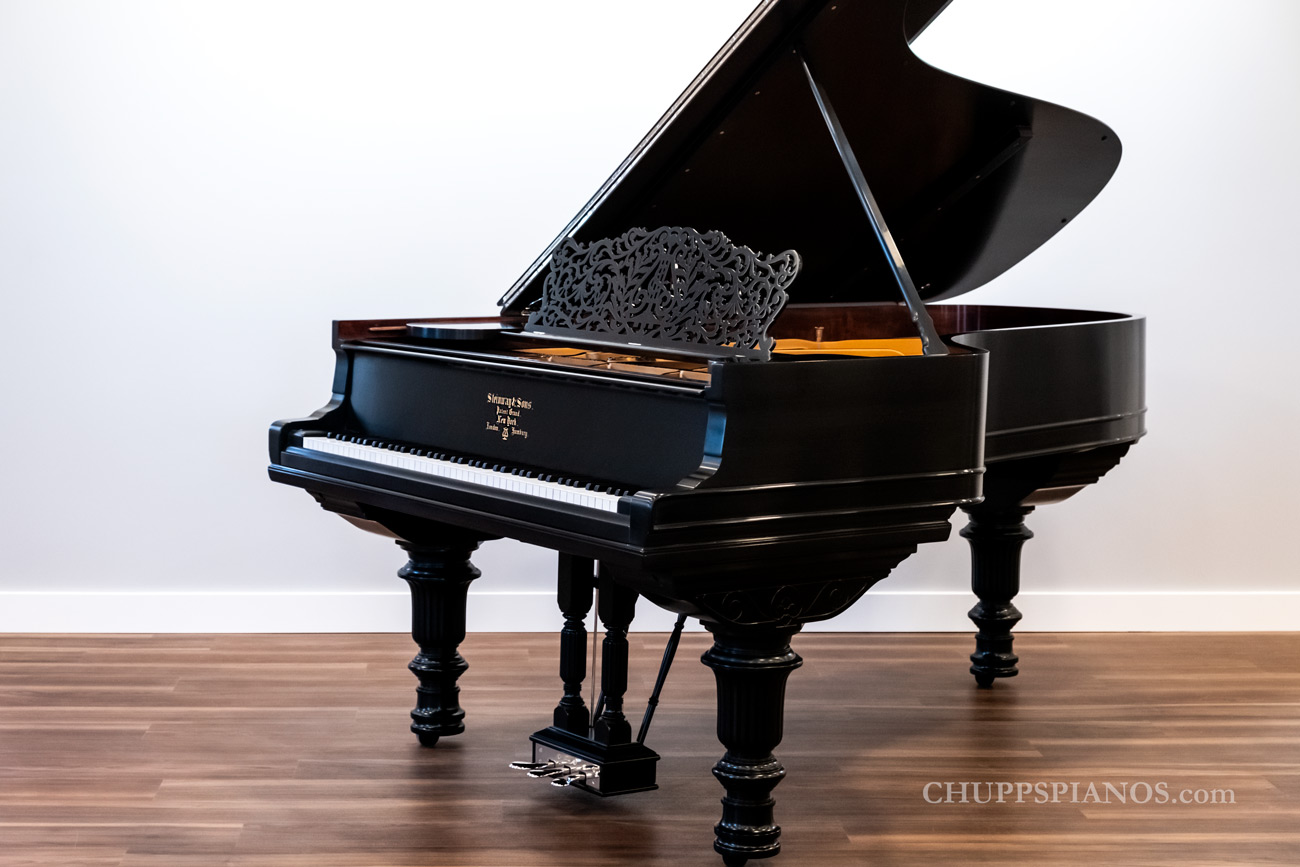
The 7’2” Steinway and Sons Model C was first manufactured in 1878 with Steinway #38675 being the first in the series to be completed on 8/24/1878. These seven-octave, 85-note pianos were based upon the earlier Parlor Grands built by Steinway. The Model C, 85-note piano was also known as the Style 3 in catalogues. The scale design featured a 21 note bass section and was redesigned from the earlier parlor grand piano by C.F. Theodore Steinway. The Model C was introduced during a time of advancement for the Steinway Company. The early Model C was first produced with a sectional case design, and in 1880 production of Model Cs with a more modern style bent-rim case began. The 85-note Model C/Style 3 was in production until 1886.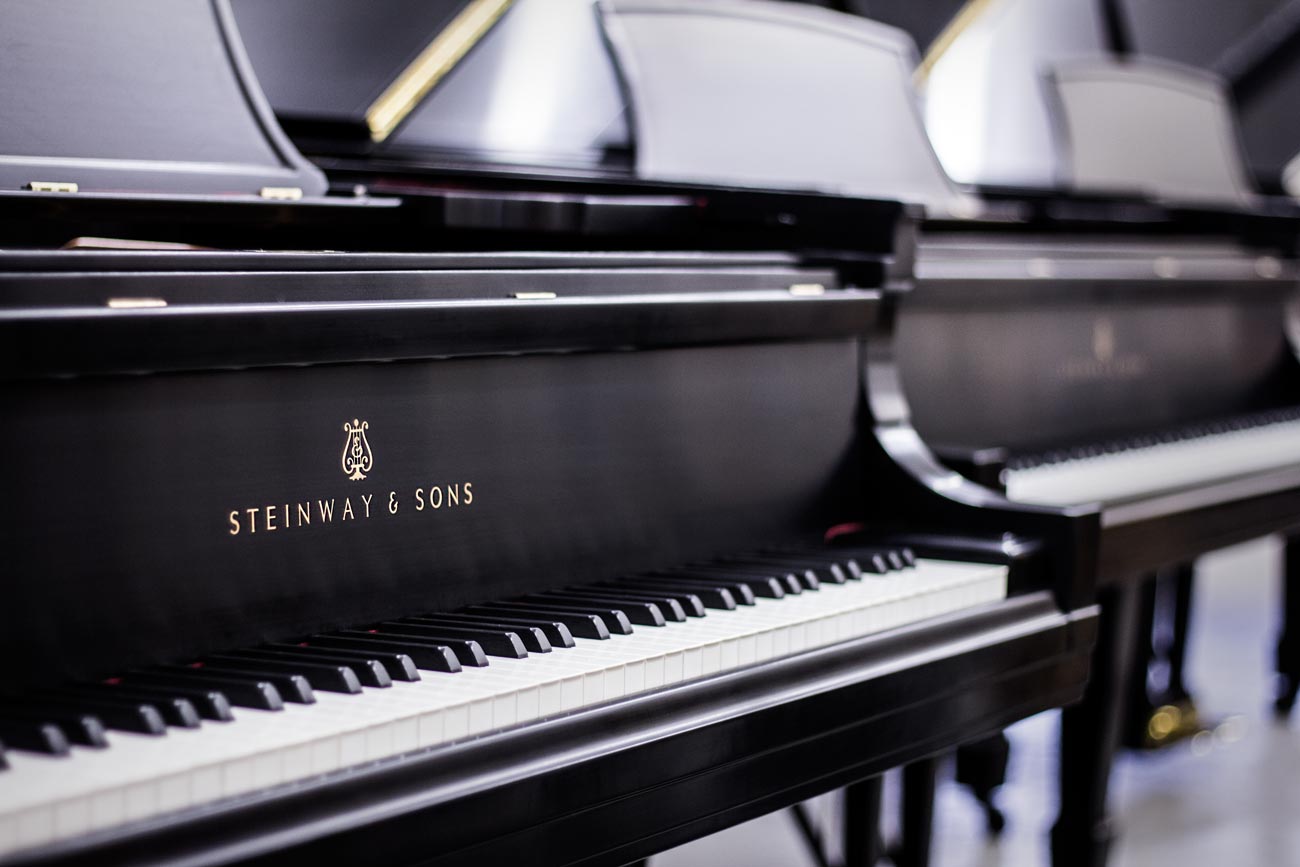
Music Director Selects Steinway Model D from Chupp’s Pianos
Stephen Baker of Bethany Lutheran Church Selects Steinway Concert Grand
Recently Chupp's Piano Service provided Bethany Lutheran Church of Spencer, Iowa with a pre-owned Steinway Model D 9' Concert Grand Piano. Music Director Stephen Baker was kind enough to send in the following testimonial.I searched all over the Midwest looking for a used concert grand for our church, and after playing dozens of pianos in Minneapolis, Iowa, and Michigan, I didn't find a better piano or a better value than at Chupp's in Indiana. When the piano arrived, the word spread throughout town and people were so excited that a couple dozen people showed up just to watch the piano get unloaded and installed in the sanctuary. People who had never seen a 9' Steinway were actually moved to tears at just the sight of it!
Steinway Model M Grand Pianos | The Popular ‘Studio Grand’
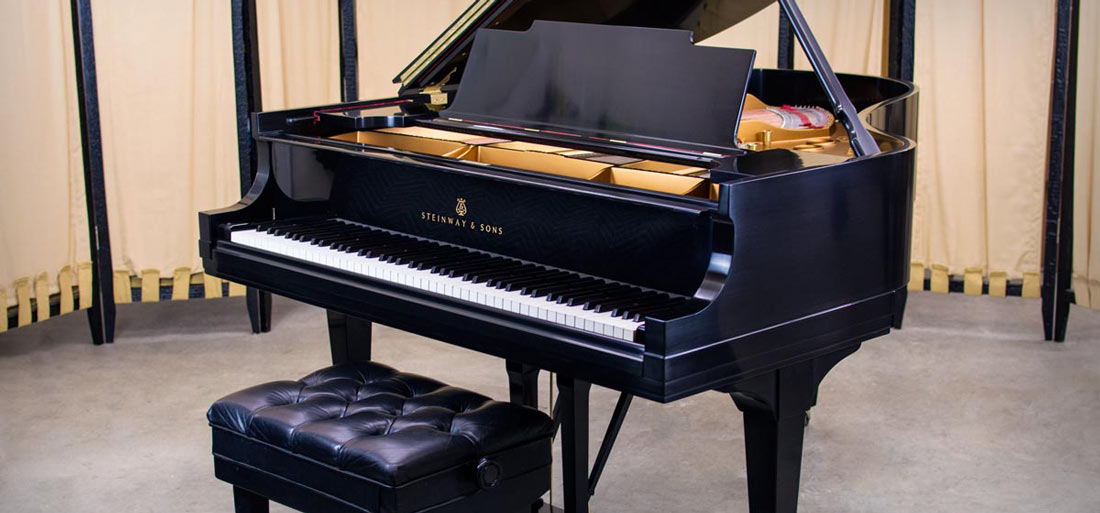
Steinway Model M Grand Pianos | Their Past, Present, & Future
The Steinway Model M is a fantastic grand piano, and has been since its creation in 1911. But before we tell the tale of the Steinway Model M, we need to understand the historical context under which this Steinway piano was invented. Things had begun to shift and change during the early part of the 20th Century. The piano had quickly become THE luxury item that every family yearned to own. Hundreds of thousands of grand and upright pianos were manufactured and sold yearly during this industry 'golden age' in the United States alone. This increasing popularity with the general public led companies to begin to look at crafting instruments that fit inside of smaller rooms and within slightly smaller budgets.
Quick Facts About Steinway Pianos | Infographic
Over 160 Years of Fine Pianos | Quick Facts about Steinways
For over 160 years, the name "Steinway" has represented the finest quality in the piano industry. Founded by Henry E. Steinway, the company quickly became a leader in both craftsmanship and innovation. Over a century and a half later Steinway & Sons continues to expand and grow. With the slogan "The Instrument of the Immortals" Steinway pianos became the preferred choice of over 90% of professional concert pianists due to their unmistakable touch and tone. Scroll through the handy infographic to learn more about the rich history and work that goes into pianos bearing the name of Steinway.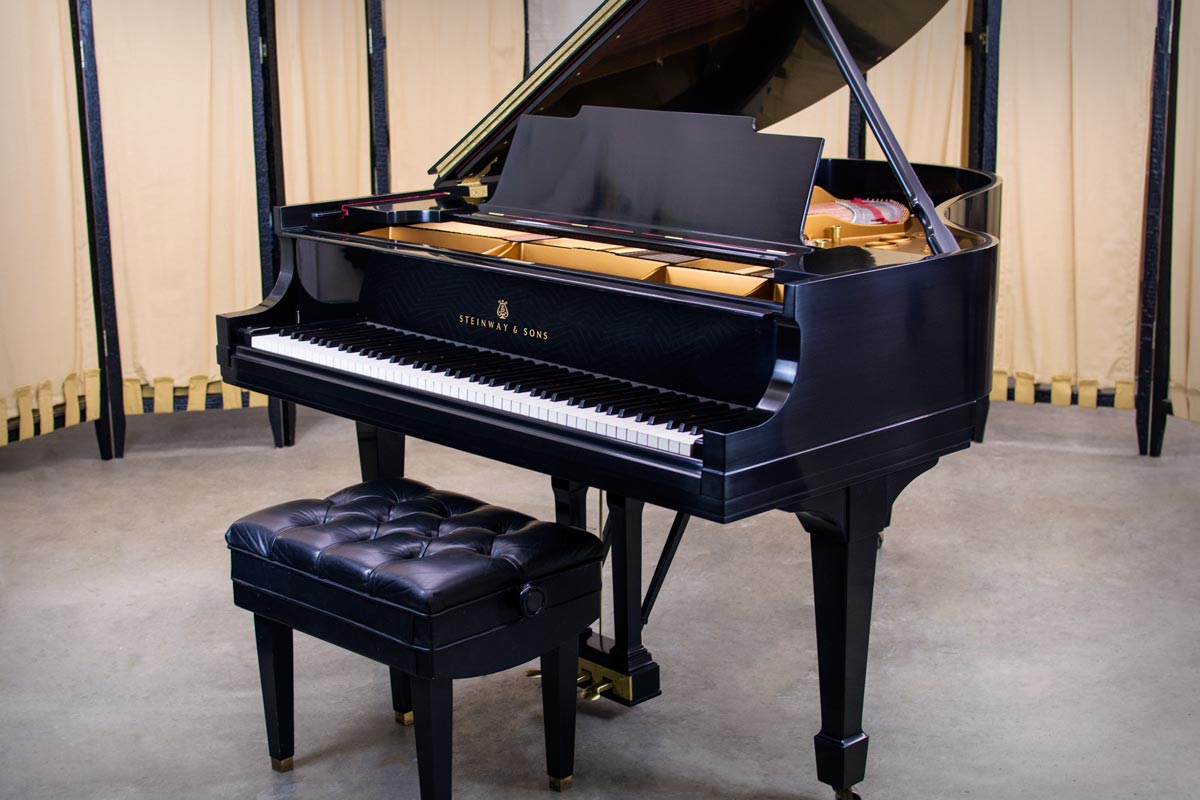
Featured Piano: 1927 Steinway Model M ‘Baby Grand’ Piano
Fully Rebuilt Steinway Model M | Fine Restored Pianos for Sale
The pre-WWII era of piano manufacturing saw the growing American industry reach its height in both size and quality. This golden age of piano manufacturing saw incredible quality and innovation become the standard as hundreds of makers competed for the hearts (and wallets) of a piano loving public. Into this era of craftsmanship Steinway Model M #250775 was born. Built in 1927 at the New York Steinway & Sons factory, this 5'7" instrument features an overstrung scale designed by Henry Ziegler. Scaled down from the larger Model O, this instrument was originally designed to give the public a smaller option in Steinway's lineup of grand pianos. Until the introduction of the 5'1" Model S, the Model M was the smallest grand piano that Steinway produced.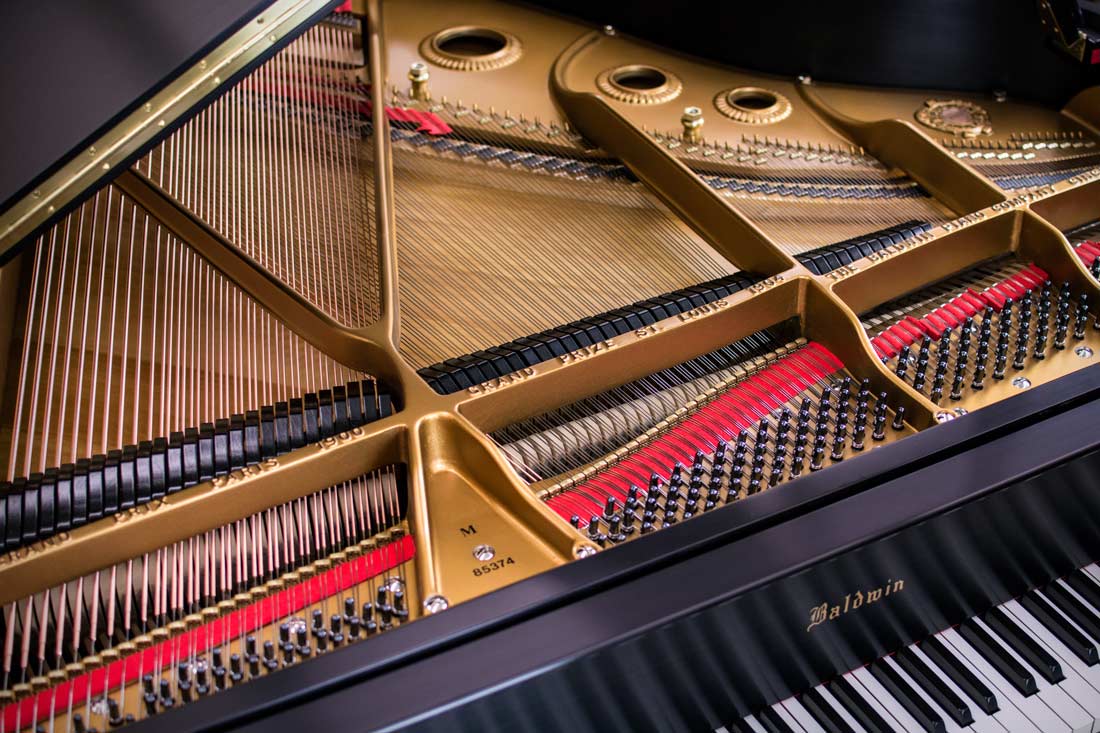
Letter to the Editor: Reader Appreciates Rebuilt Baldwin Piano
An outstanding musical gift to our community was presented at the Ruthmere Museum Friday night April 1. The event welcomed back a totally restored 1938 Baldwin Baby Grand piano, generously funded by the original owners, the Deputy family.
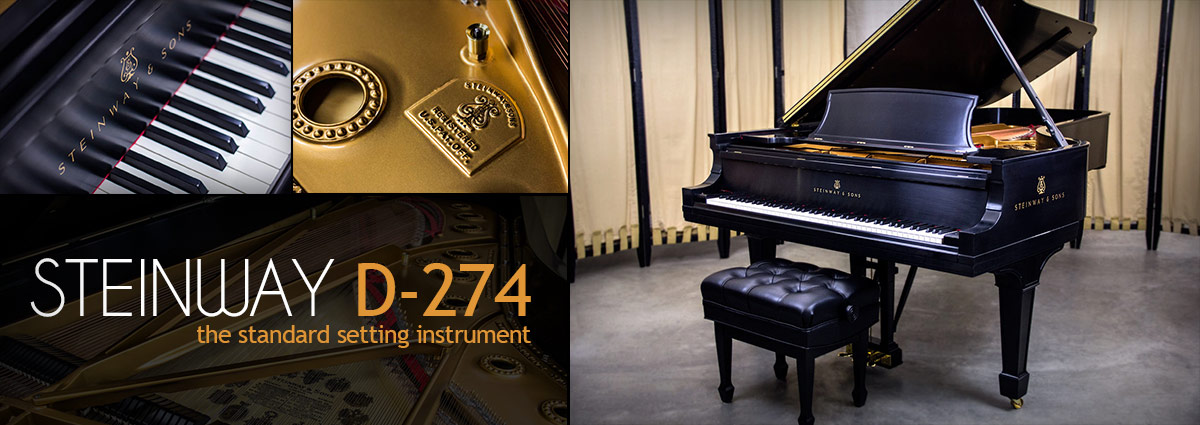
The Steinway Model D | The King of Instruments
The Steinway Model D Benchmark
The World's Standard For Concert Grand Pianos

The Steinway & Sons Model D grand piano is one which signifies an instrument's grace, power, and delicacy unlike any other. Measuring at 8'11 3/4" in length, the Model D towers above regular grand pianos, which are usually around 5’6” to 6’ long. Truly the pinnacle of Steinway's historic dedication to innovation and top shelf craftsmanship, the thousand pound Model D-274 truly is the standard by which other concert pianos are judged against. Decades of craftsmanship and development, signified and represented by one instrument it has long been considered the first choice of concert pianists.
The Steinway Model O vs. Model L – What’s the Difference?
The Steinway Model O vs. the Model L | What's the Difference?
Question: “The Steinway Model O and the Model L grand pianos seem to be about the same? What is the difference?